Quick answer: The pygmy corydoras (Corydoras pygmaeus) is the tiniest, most charming cory catfish you can keep. At about an inch long it is peaceful, active, and perfect for nano tanks, and unlike most cories it spends a lot of its time hovering in midwater like a little underwater hummingbird instead of just sitting on the bottom. Keep a group of at least 8 to 10, give them fine sand rather than sharp gravel, which damages their delicate barbels, feed a meaty micro diet, and pair them with tiny peaceful tankmates. The one thing stores rarely tell you: pygmy cories are constantly mislabeled and mixed up with two lookalike dwarf cories, so it helps to know exactly what you are buying.
Pygmy corydoras at a glance
| Detail | Pygmy corydoras |
|---|---|
| Scientific name | Corydoras pygmaeus |
| Adult size | About 1 inch (2.5 cm) |
| Lifespan | Around 3 to 5 years |
| Temperature | 72 to 79 F (22 to 26 C) |
| pH | 6.0 to 7.5, soft to neutral |
| Minimum tank | 10 gallons for a group |
| Group size | 8 to 10 or more |
| Temperament | Peaceful, active, shoaling |
| Diet | Micro-predator omnivore |
| Care level | Easy, but sensitive to water quality |
I keep and film cory catfish on my channel, and the video below walks through general corydoras care that applies to pygmies too, with the pygmy-specific details in the sections that follow.
https://www.youtube.com/watch?v=ORtD74jhO2Y
Pygmy vs salt-and-pepper vs tailspot: which tiny cory do you have?
This is the part that catches people out. There are three “miniature” cories in the trade, they look similar at a glance, and stores mix them up constantly. Getting the right one matters, because they behave a little differently.
| Feature | Pygmy cory (C. pygmaeus) | Salt-and-pepper cory (C. habrosus) | Tailspot cory (C. hastatus) |
|---|---|---|---|
| Size | About 1 in | About 1 in | 1 to 1.4 in |
| Body | Slim, silvery | Silvery with a blotchy, mottled look | More elongated, translucent |
| Stripe | One clean black line from snout to tail | A broken, uneven stripe | A thin, faint stripe |
| Tail marking | The stripe splits onto the tail | Striped and spotted tail | A black spot inside a white crescent at the tail base |
| Where it swims | A lot of midwater hovering | Mostly along the bottom | Highest of the three, often midwater |
If the fish has one clean stripe running straight to a split on the tail and it keeps drifting up into open water, you have a true pygmy cory.
Appearance and behavior
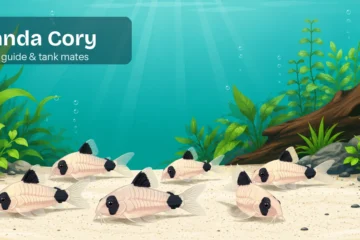
Pygmy cories have the classic cory shape in miniature: an armored, teardrop body, a big head with an under-slung mouth, and little barbel “whiskers” for finding food. They are silver with a single bold black stripe and big dark eyes.
Two behaviors surprise new keepers. First, they do not stay on the bottom. Pygmy cories flit around in midwater in a loose shoal, which is unusual for a catfish and a big part of their charm. Second, they will dart up to the surface now and then to gulp a mouthful of air. This is normal. Like all cories they can breathe air through a modified gut when they need to. It only becomes a warning sign if they are constantly racing to the surface to gasp, which points to poor water quality or low oxygen.
Setting up the tank
Pygmy cories come from soft, slow, planted waters in South America, and a good tank copies that.
- Fine sand, not sharp gravel. This is the single most important setup choice. Pygmy cories forage by digging through the substrate with their barbels, and sharp gravel wears those barbels down. A cory that loses its barbels cannot find food and can slowly starve. Use soft sand or very fine, smooth-edged gravel.
- A cycled, stable tank. They are small and sensitive to ammonia, nitrite, and nitrate, so cycle the tank fully before adding them and keep up with water changes.
- Plants and cover. Plant it well and add cover from driftwood and broad-leaved plants, which double as resting spots. Mosses are a bonus, since they trap tiny food particles the cories graze on. Our low light aquarium plants and java moss guides suit this perfectly, and the fish tank decorations guide covers safe hardscape.
- Gentle flow. Keep the current soft and the tank calm.
- Tank size. A group is happy in a 10 gallon, and a 20 gallon fish tank gives them room for a bigger, better-looking shoal.
Water parameters
Aim for a temperature of 72 to 79 F, which is slightly cooler than many tropical fish prefer, a pH of 6.0 to 7.5, and soft to moderately soft water. Stability matters more than perfection, so keep ammonia and nitrite at zero and control nitrate with regular water changes. Because they are so small, they feel water swings faster than bigger fish do.
Diet and feeding
Here is a myth worth correcting: pygmy cories are often sold as algae eaters and handed a tub of algae wafers, but they are really micro-predators. They want meaty foods, not vegetables.
Feed a sinking catfish or shrimp pellet as a staple, and supplement with small frozen or live foods like baby brine shrimp, daphnia, micro worms, and finely chopped bloodworms. Because they are tiny and forage on the bottom, make sure food actually reaches them and is small enough to fit their little mouths. In a busy community tank, faster fish can strip the surface before anything sinks, so feed after lights-out or target-feed the bottom if needed.
Group size and temperament
Pygmy cories are shoaling fish, and they are only happy and confident in numbers. Keep a minimum of 6, and honestly 8 to 10 or more is where they come alive, tightening into a shoal and drifting around the tank together. Kept in too small a group they get stressed, hide, and lose their charm.
They are completely peaceful and never bother tankmates. The flip side is that they are easily bullied, intimidated, and out-competed for food, so their company has to be chosen with that in mind.
Tank mates
The rule is small and gentle. At an inch long, a pygmy cory can be eaten or out-muscled by surprisingly ordinary community fish.
Good tank mates include tiny peaceful nano fish like ember tetras, chili rasboras, and other micro rasboras, plus snails and shrimp. Amano shrimp are a classic pairing, though very small dwarf shrimp fry may get eaten. For more calm options, see our best aquarium fish for beginners guide.
Avoid anything large, fast, or nippy, including most gouramis, cichlids, and bigger tetras and barbs, which will stress or outcompete them.
Breeding pygmy corydoras
Pygmy cories are one of the easier cories to breed, and they are near-constant spawners in good conditions. Cooler, clean water and a rich diet trigger them.
During spawning the female cups a few eggs between her pelvic fins, the male fertilizes them, and she then swims off and sticks the sticky eggs onto plants, glass, or decor. A female may lay around a hundred eggs over a session. The adults will eat their own eggs, so move the parents out, or move the eggs, once spawning is done. The fry are extremely tiny and need very small first foods like infusoria before they can manage baby brine shrimp. Keeping a slightly higher ratio of males to females helps spawning along.
I break the whole cory breeding process down step by step in this video:
https://www.youtube.com/watch?v=ENBalRYHzpw
Common pygmy corydoras problems
- Worn or missing barbels. Almost always caused by sharp substrate. Switch to sand, and the barbels can partly recover if caught early.
- Constant gasping at the surface. An occasional gulp of air is normal, but nonstop trips to the surface mean the water quality or oxygen level needs attention.
- Hiding and stress. Usually a group that is too small. Add more pygmy cories and they settle.
- Fish that stay skinny. Often they are being out-competed for food. Make sure enough small, sinking food actually reaches the bottom.
FAQ
How many pygmy corydoras should I keep together?
At least 6, and ideally 8 to 10 or more. They are shoaling fish that only feel secure and behave naturally in a decent-sized group.
What size tank do pygmy corydoras need?
A group is fine in a 10 gallon, since they are true nano fish. A 20 gallon lets you keep a larger, more impressive shoal.
Do pygmy corydoras stay on the bottom?
No, and that surprises people. Unlike most cories, pygmy cories spend a lot of time hovering in midwater in a loose shoal, only heading down to forage.
What do pygmy corydoras eat?
Meaty micro foods, not algae wafers. Feed sinking catfish or shrimp pellets plus small frozen or live foods like baby brine shrimp, daphnia, and micro worms.
Do pygmy corydoras need sand?
Fine sand is strongly recommended. Sharp gravel wears down and damages their barbels, which they need to find food, so smooth sand keeps them healthy.
What fish can live with pygmy corydoras?
Only small, peaceful tankmates: nano fish like ember tetras and chili rasboras, and snails or larger shrimp. Avoid anything big, fast, or aggressive.