Quick answer
The best low light aquarium plants are Anubias, Java fern, Bucephalandra, Java moss, Cryptocoryne, Amazon sword, Vallisneria, hornwort, Anacharis, water wisteria, guppy grass and floating plants like frogbit. None of them need CO2 injection. They grow more slowly than high tech plants, which is the trade off, and in return they tolerate basic lighting, imperfect maintenance and beginner mistakes. The most common reason these plants still die is not lighting, it is being planted incorrectly, particularly burying the rhizome on Anubias and Java fern.
Low light plants and no CO2 plants are mostly the same list, which is why guides on both topics name the same species. If a plant tolerates weak lighting, it usually tolerates low carbon too, because both come down to how demanding the plant is.
This guide covers what low light actually means, twelve plants that reliably work, and the mistakes that kill them anyway. That last part matters more than the plant list, because most people who lose an “easy” plant did not lose it to lighting.
Low light plants at a glance
| Plant | Light | Growth | CO2 needed | Beginner rating |
|---|---|---|---|---|
| Anubias | Low | Slow | No | ★★★★★ |
| Java fern | Low | Slow | No | ★★★★★ |
| Java moss | Low | Medium | No | ★★★★★ |
| Cryptocoryne | Low | Slow | No | ★★★★☆ |
| Bucephalandra | Low | Very slow | No | ★★★★☆ |
| Vallisneria | Low to medium | Fast | No | ★★★★☆ |
| Amazon sword | Low to medium | Medium | No | ★★★★☆ |
| Hornwort | Low | Fast | No | ★★★★☆ |
| Anacharis | Low | Fast | No | ★★★★☆ |
| Guppy grass | Low | Very fast | No | ★★★★☆ |
| Water wisteria | Low to medium | Fast | No | ★★★★☆ |
| Hygrophila polysperma | Low | Fast | No | ★★★★☆ |
What low light actually means
Old advice used watts per gallon. Ignore it. LED lighting made that measurement meaningless, since a modern LED produces far more usable light per watt than the fluorescent tubes the rule was built around.
In practice, low light means:
- A basic LED that came with an aquarium kit
- A light running roughly 6 to 8 hours a day
- A tank with no CO2 injection and little or no fertiliser dosing
- Enough light to read comfortably by, not enough to grow a carpet
If that describes your tank, every plant below will work for you.
One thing to be clear about: low light does not mean no light. Plants still photosynthesise. A tank in a dark corner with the light off most of the day will lose even Anubias eventually.
Do low light plants need CO2?
No, and this is worth stating plainly because the hobby can make CO2 sound compulsory.
All plants use carbon. In a tank without injection, they take what is naturally present from fish respiration, decomposition and gas exchange at the surface. Low light plants are adapted to work with that smaller supply.
What you give up is speed. A low tech tank grows slowly. What you get back is a tank that does not crash when you go away for a week, and far less algae pressure, because slow growth and modest light are much easier to keep in balance.
Epiphytes: attach these to wood or rock
These plants do not go in the substrate at all, which makes them the most beginner friendly group there is.
1. Anubias
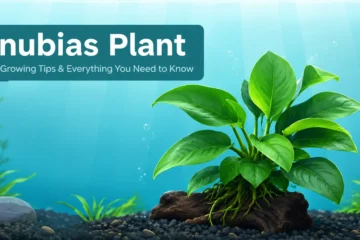
The default low light plant. Thick, dark, leathery leaves, extremely slow growing, and almost indestructible when planted correctly. Anubias barteri and the smaller Anubias nana and petite are the common varieties.
Critical: the rhizome, the thick horizontal stem the leaves grow from, must stay above the substrate. Buried rhizomes rot. This is the single most common way people kill Anubias, and it is why rhizome rot is worth recognising early.
2. Java fern
Tough, forgiving, and it grows from a rhizome like Anubias, so the same rule applies. Attach it to wood or rock and never bury it. Older leaves develop black spots and little plantlets, which is normal reproduction rather than disease.
3. Bucephalandra
Slower and more expensive than Anubias but similar in care. Small, often iridescent leaves. Same rhizome rule.
4. Java moss
Grows on almost anything, needs no substrate, and provides cover for shrimp and fry. It will grow into a mess if you never trim it, which is the only real downside.
Rooted plants: these go in the substrate
5. Cryptocoryne
Crypts are excellent low light plants once established, with a lot of colour and leaf shape variety.
Expect them to melt when you first plant them. They shed their old leaves and regrow adapted ones. New keepers panic and pull them out, which is exactly the wrong move. If the roots and crown are firm, leave them alone. There is more on this in why aquarium plants melt.
6. Amazon sword
A large, striking background plant. It is a heavy root feeder, which is the detail most lists skip. In plain sand or gravel with no nutrients, it starves slowly. That is what root tabs are for, and swords are the plant that most needs them.
7. Vallisneria
Long ribbon leaves that reach the surface and spread by runners. Hardy, fast for a low tech plant, and it will fill a tank if you let it. Do not bury the crown, only the roots.
Fast growing stem plants for low tech tanks
Fast growers are useful beyond looks. They absorb excess nutrients, which gives algae less to work with while a tank settles.
8. Hygrophila polysperma
One of the fastest growing plants that tolerates low light. Trim it, replant the cuttings, and it fills space quickly.
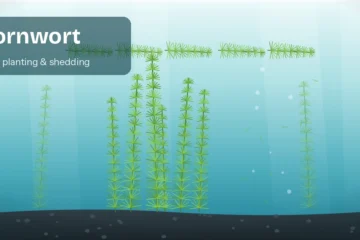
9. Hornwort
Will grow floating or planted, and grows fast enough to be genuinely useful in a new tank. It sheds needles, which some people find messy.
10. Anacharis (Elodea)
The classic beginner stem plant. Cheap, fast, and it works floating or planted.
11. Water wisteria
Attractive leaf shape, adaptable, and forgiving. Leaf form changes depending on conditions, which surprises people but is normal.
12. Guppy grass
Extremely fast, excellent for shrimp and fry cover, and one of the best plants for soaking up excess nutrients in a new tank.
Floating plants
Frogbit, salvinia and red root floaters all work with basic lighting and no CO2, since they sit at the surface with direct access to air. They shade the tank, which reduces algae, and their dangling roots look good.
A warning about duckweed. It gets recommended constantly and it is nearly impossible to remove once introduced. Every fragment regrows. Add it deliberately or not at all.
What about carpet plants without CO2?
Mostly no, and this is where beginner guides oversell.
The classic carpets, dwarf hairgrass, Monte Carlo, dwarf baby tears, all want strong light and usually CO2 to grow densely and stay flat. Without those they tend to grow leggy, thin out, and eventually melt away.
Some keepers do get Monte Carlo or dwarf hairgrass to carpet in a low tech tank, but it is slow and inconsistent. If a dense green carpet is the look you want, that is the point where CO2 stops being optional. You do not need an expensive setup to start, and I built a DIY CO2 diffuser and bubble counter on the channel if you want the cheap version.
Micro sword and dwarf sagittaria are the more realistic low tech options, and both stay taller than a true carpet.
Water parameters for low light plants
These plants are adaptable, and stability matters far more than hitting an exact figure. Broad workable ranges:
| Plant | Temperature | pH |
|---|---|---|
| Anubias | 22 to 28°C (72 to 82°F) | 6.0 to 8.0 |
| Java fern | 20 to 28°C (68 to 82°F) | 6.0 to 7.5 |
| Bucephalandra | 22 to 28°C (72 to 82°F) | 6.0 to 7.5 |
| Java moss | 18 to 28°C (64 to 82°F) | 5.5 to 8.0 |
| Cryptocoryne | 22 to 28°C (72 to 82°F) | 6.0 to 7.5 |
| Amazon sword | 22 to 28°C (72 to 82°F) | 6.5 to 7.5 |
| Vallisneria | 18 to 28°C (64 to 82°F) | 6.5 to 8.0 |
| Hornwort | 15 to 28°C (59 to 82°F) | 6.0 to 7.5 |
| Anacharis | 15 to 26°C (59 to 79°F) | 6.5 to 7.5 |
| Guppy grass | 18 to 28°C (64 to 82°F) | 6.0 to 7.5 |
Almost all of these overlap with standard tropical community tank conditions, which is part of why they suit beginners. Vallisneria is the one worth noting separately, since it generally prefers harder water and can struggle in very soft tanks.
Why easy plants still die
Lighting is rarely the actual cause. These five are.
Burying the rhizome. Anubias, Java fern and Bucephalandra rot when the rhizome is under the substrate. Only the roots go in, and ideally they are attached to hardscape instead.
Pulling out melting crypts. Melt is the plant adapting, not dying. Leave it alone.
No nutrients at all. Low light plants are undemanding, not self sufficient. Root feeders in inert substrate need tabs, and water column feeders need occasional liquid fertiliser. Pale, yellowing or holed leaves are the tank telling you something is missing, and the pattern points at which nutrient it is.
Too much light for a low tech tank. Counterintuitive, but running a strong light for ten hours with no CO2 and no fertiliser mostly grows algae. In a low tech tank, less light is often the fix.
Impatience. These plants are slow by design. Anubias might put out one leaf a month. That is normal, not a failure.
Best low light plant for each job
Best beginner plant overall: Anubias. Attaches to hardscape, tolerates almost any light, and grows too slowly to cause problems.
Best plant for shrimp: Java moss. Dense cover for shrimplets and a surface that grows the biofilm they graze on.
Best background plant: Vallisneria. Long ribbon leaves reach the surface and spread by runners to fill the back of a tank.
Best floating plant: Frogbit. Attractive dangling roots, shades the tank to limit algae, and far easier to control than duckweed.
Best fast grower for a new tank: Guppy grass or hornwort. Both soak up excess nutrients while the tank settles, which gives algae less to work with.
Best plant for attaching to driftwood: Java fern or Bucephalandra. Both grow from a rhizome and are designed to sit on hardscape rather than in substrate.
Best colourful low light plant: Cryptocoryne. Bronze, red and green varieties, and far more colour than most low tech plants offer.
Best plant for a very low tech tank with no fertiliser: Java moss and Anubias. Both survive on remarkably little.
FAQ
What are the best low light aquarium plants? Anubias, Java fern, Bucephalandra, Java moss, Cryptocoryne, Amazon sword and Vallisneria are the most reliable. All tolerate basic lighting and none require CO2 injection.
Do low light aquarium plants need CO2? No. They use the carbon naturally available from fish respiration and decomposition. Growth is slower than in a CO2 injected tank, which is the trade off.
What are the easiest aquarium plants for beginners? Anubias and Java fern, because they attach to wood or rock rather than needing substrate, and they tolerate almost any lighting. The main rule is never to bury the rhizome.
Can I grow a carpet without CO2? Not densely, in most cases. Classic carpeting plants want strong light and CO2. Micro sword and dwarf sagittaria are more realistic low tech alternatives, though they grow taller than a true carpet.
What are the fastest growing aquarium plants without CO2? Hornwort, Anacharis, guppy grass, water wisteria and Hygrophila polysperma. Fast growers also help limit algae by taking up excess nutrients.
Do low light plants still need fertiliser? Usually some. Root feeders such as Amazon sword and Cryptocoryne benefit from root tabs in inert substrate, and most tanks benefit from occasional liquid fertiliser for water column feeders.
What temperature and pH do low light aquarium plants need? Most do well between roughly 22 and 28°C (72 to 82°F) with a pH around 6.0 to 7.5, which overlaps with standard tropical community tank conditions. Stability matters more than exact numbers. Vallisneria is the main exception, generally preferring harder water.
How many hours should I run the light in a low tech tank? Around 6 to 8 hours a day is a reasonable starting point. Longer photoperiods without CO2 and fertiliser tend to favour algae rather than plants.
Why are my low light plants still dying? The most common causes are a buried rhizome on Anubias or Java fern, normal melt on newly planted crypts being mistaken for death, or no nutrients at all in an inert substrate. Lighting is rarely the real problem.
Final word
Low light plants and no CO2 plants are the same group, and it is a genuinely good group. Anubias, Java fern and crypts will grow in a basic tank with a basic light and very little intervention.
The plants are not the hard part. Attach the rhizome plants instead of burying them, leave melting crypts alone, put tabs under your root feeders, and resist the urge to run the light longer to make things grow faster.
Do that, and a low tech tank is not a compromise. It is just a slower, calmer version of the same hobby.