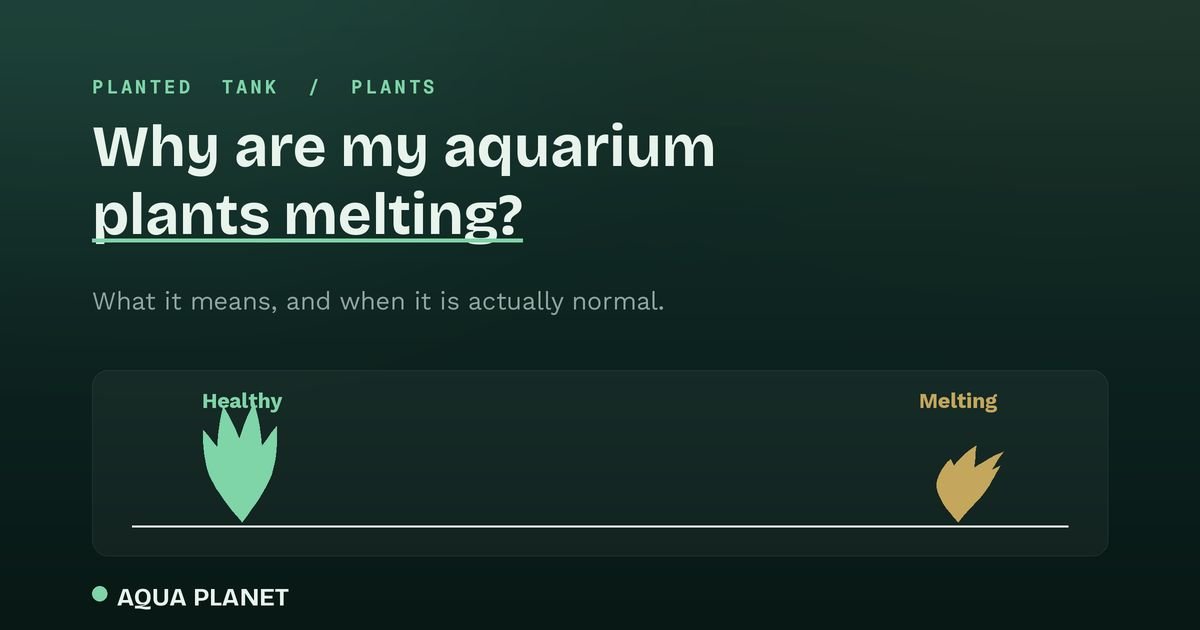
Quick answer: Aquarium plants melt because they are switching from growing above water (emersed) to growing underwater (submersed). It is normal, especially for Cryptocoryne spp., Echinodorus species, and stem plants. If the crown, rhizome, or bulb is still firm, the plant will usually push out new underwater leaves within 2 to 8 weeks.
You planted a fresh batch of plants. The tank looked amazing. Three days later the leaves are yellow, see through, or turning to mush on the substrate.
I know that feeling. It looks like you killed everything in the first week.
Most of the time you did not. Here is what is actually happening, how long it lasts, which plants do it worst, and when melt is a real problem instead of a normal one.
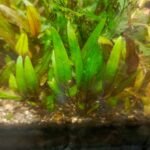
Is aquarium plant melting normal in a new tank?
Yes. It is so normal that experienced aquascapers expect it.
Most aquarium plants you buy were not grown underwater. Nurseries grow them emersed, meaning above the waterline with their leaves in open air. It is faster, cheaper, and the plants ship better that way.
Those air leaves are built wrong for your tank. They have a waxy surface, different cell structure, and no way to pull CO2 from water. Once you submerge them, the plant does the sensible thing. It dumps the useless leaves and starts building underwater ones.
That process looks like death. It is closer to a snake shedding skin.
Tissue culture plants do the same thing, sometimes harder, because they come out of a sterile gel pot with zero exposure to real water.
Will melted aquarium plants grow back?
In most cases yes, as long as the core of the plant is still firm.
The part that matters depends on the plant type:
- Rooted plants like Cryptocoryne spp. and Echinodorus spp.: check the crown, the point where leaves meet roots. If it is firm, the plant is alive. Root feeders like Cryptocoryne and Echinodorus also do better long term if there is something in the substrate for them. I make my own root tabs with Osmocote if you want the cheap version.
- Rhizome plants like Anubias barteri, Microsorum pteropus (Java fern), and Bucephalandra spp.: check the rhizome, that thick horizontal green stem. Firm rhizome means it will regrow.
- Stem plants like Rotala rotundifolia and Ludwigia repens: check the top few inches. If the tips are still solid and green, cut them off and replant just the tops.
- Bulbs like Aponogeton spp.: squeeze the bulb gently. Firm is alive, squishy is gone.
If the core is mushy, smells bad, or falls apart when you touch it, that plant is finished. Pull it out so it does not rot in your water.
Which plants melt the most, and how long recovery takes
Why Are My Aquarium Plants Melting? (And Will They Grow Back?
| Plant | Melting | Typical recovery |
|---|---|---|
| Cryptocoryne spp. | High | 4 to 8 weeks |
| Echinodorus bleheri (Amazon sword) | Moderate | 2 to 4 weeks |
| Vallisneria spp. | Moderate | 2 to 4 weeks |
| Rotala rotundifolia | Moderate | 1 to 3 weeks |
| Ludwigia repens | Moderate | 1 to 3 weeks |
| Aponogeton spp. | High (dormancy cycle) | 4 to 8 weeks |
| Microsorum pteropus (Java fern) | Rare | Fast, if rhizome healthy |
| Anubias barteri | Rare | Fast, if rhizome healthy |
| Bucephalandra spp. | Rare | Slow, several weeks |
That last group matters. If your Anubias or Java fern is melting, something actually is wrong, because these plants do not normally do this. Nine times out of ten the rhizome got buried in the substrate and rotted. Pull it up, tie it to rock or wood instead, and leave the rhizome exposed.
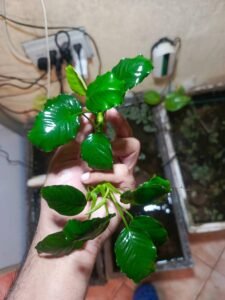
How long does aquarium plant melt last?
Rough timeline based on what most people see:
- Week 1 to 2: the worst of it. Old leaves yellow, go clear, or dissolve.
- Week 2 to 4: new growth appears from the center or the base. The new leaves look different, usually thinner and a brighter green.
- Week 4 to 8: the plant settles in and grows normally.
Cryptocoryne is the slow one. A crypt can go completely bald and take six to eight weeks to come back. That is not a failure. That is just how crypts behave.
If you are past two months with no new growth at all and the base is soft, then it is time to accept it is gone.
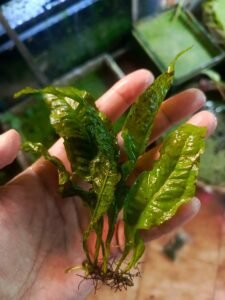
Should I remove melting plants from the aquarium?
Remove the melted leaves, not the plant.
A leaf that has gone soft and transparent is not coming back. Leaving it in the tank does two things you do not want. It rots and adds ammonia, and it gives algae a soft surface to grab onto.
So:
- Trim off any leaf that is mushy, clear, or falling apart
- Cut close to the base but do not cut into the crown or rhizome
- Scoop out the loose bits floating around
- Leave anything still green, even if it looks rough
Do not uproot the plant to inspect it. Every time you pull a plant up you reset its rooting progress and make the melt last longer.
AQUA PLANET tip
New hobbyists often mistake melting for dying. If you can see fresh green shoots coming from the center of the plant, leave it alone. Constantly moving it or replacing it usually just delays recovery.
What actually causes melting
Beyond the normal emersed to submersed switch, these are the real causes worth checking.
Buried rhizome
Anubias, Java fern, and Bucephalandra rhizomes must sit above the substrate. Buried rhizome equals rot equals melt.
Empty substrate
Root feeders like Cryptocoryne, Echinodorus, and Vallisneria pull most of their nutrition from below. Plain gravel with nothing in it will keep them alive but not happy. Melting older leaves is often the first complaint.
You do not need to tear the tank down. Root tabs pushed under those plants will fix it.
Too much light, not enough of everything else
A common beginner setup: strong light, no CO2, no fertilizer, brand new plants. The light demands growth the plant cannot fuel, so it burns through reserves and the leaves fail. Algae usually shows up at the same time.
If you are low tech, run your light around 6 to 7 hours at moderate intensity while things settle.
Big water parameter swings
Plants tolerate a wide range. What they do not tolerate is that range changing every few days.
Massive water changes, chasing pH with chemicals, moving plants around constantly, all of it keeps the plant in stress mode. Pick reasonable parameters and hold them steady.
Ammonia from new aquasoil
If you used a fresh aquasoil like ADA Amazonia or Fluval Stratum, it leaches ammonia for the first few weeks. Some melt during this period is expected, and it passes on its own. Larger, more frequent water changes help during that window specifically.
Physical damage
Crushed stems from tweezers, torn roots, plants pulled up and replanted three times. Handle plants at the base, plant once, and leave them alone.
Mistakes that make plant melt worse
- Pulling plants out every few days to check on them
- Turning the light up to help the plant recover
- Adding several fertilizers at once
- Burying Anubias or Java fern rhizomes
- Trimming leaves that are still green
- Moving plants to a new spot mid recovery
- Replacing the plant before giving it a month
Every one of these is the instinct to do something. In this situation doing nothing is usually the correct move.If the damage is on older leaves and looks like yellowing, pinholes or dark patches rather than soft transparent mush, you are probably looking at a nutrient problem instead of melt.
Do melting plants create ammonia?
Yes, a little. Decaying plant matter breaks down the same way any organic waste does.
In a cycled tank with a healthy filter this is usually not enough to hurt anything. In a brand new uncycled tank with fish already in it, it can push your ammonia up. That is another reason to trim the dead leaves out rather than leaving them to break down.
If you are cycling without fish, melting leaves are actually fine. They feed the process.
How to prevent melt when you plant
You cannot prevent it completely, and honestly you should not try. Some melt is just the plant adapting.
What you can do is keep it short and mild:
- Buy plants already grown submersed if you can find them. Ask the seller.
- Get plants in the water fast. Do not leave them in a bag for two days.
- Rinse gently, especially tissue culture plants, to get the gel off the roots.
- Plant once, in the right place, and do not move them.
- Keep rhizomes above the substrate.
- Add root tabs for Cryptocoryne, Echinodorus and Vallisneria if your substrate is inert.
- Start with moderate light, not maximum.
- Do not add a new product every time something looks off.
The last one is the hardest. When a tank looks bad the instinct is to fix it with something. Usually the fix is time.
Frequently asked questions
Is it normal for aquarium plants to melt?
Yes. Most plants are grown out of water and shed those leaves after planting. It is the most common thing that happens in a new planted tank.
Can melting plants be saved?
Usually. If the crown, rhizome, or bulb is still firm, the plant will regrow. Trim the dead leaves and wait.
How do I stop fish tank plants from melting?
You cannot stop it entirely, but you can shorten it. Buy submersed grown plants, plant them quickly and once, keep rhizomes exposed, add root tabs for root feeders, and keep your water parameters stable.
Do melting plants create ammonia?
Yes, but a small amount. In a cycled tank it is not a problem. Remove the mushy leaves anyway so they do not rot and feed algae.
How long does Cryptocoryne melt last?
Longer than most plants. Four to eight weeks is normal, and a crypt can lose every leaf and still come back.
Should I remove melting plants from the aquarium?
Remove the melted leaves only. Leave the plant rooted in place unless the crown or rhizome has gone soft.
The short version
- Check whether the crown or rhizome is still firm. Firm means alive.
- Trim off the dead leaves. Leave the plant in place.
- Make sure no rhizomes are buried.
- Add root tabs if you have crypts or swords in plain gravel.
- Then leave the tank alone for a month.
That last step does more than anything else on the list.
[faq]
Q: Question 1 here
A: Answer here
Q: Question 2
A: Answer 2
[/faq]