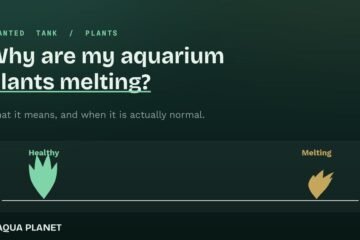
Quick answer: Aquarium plants melt because they are switching from growing above water (emersed) to growing underwater (submersed). It is normal, especially for Cryptocoryne spp., Echinodorus species, and stem plants. If the crown, rhizome, or bulb is still firm, the plant will usually push out new underwater leaves within 2 to 8 weeks.
You planted a fresh batch of plants. The tank looked amazing. Three days later the leaves are yellow, see through, or turning to mush on the substrate.
I know that feeling. It looks like you killed everything in the first week.
Most of the time you did not. Here is what is actually happening, how long it lasts, which plants do it worst, and when melt is a real problem instead of a normal one.
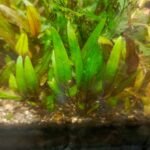
Is aquarium plant melting normal in a new tank?
Yes. It is so normal that experienced aquascapers expect it.
Most aquarium plants you buy were not grown underwater. Nurseries grow them emersed, meaning above the waterline with their leaves in open air. It is faster, cheaper, and the plants ship better that way.
Those air leaves are built wrong for your tank. They have a waxy surface, different cell structure, and no way to pull CO2 from water. Once you submerge them, the plant does the sensible thing. It dumps the useless leaves and starts building underwater ones.
That process looks like death. It is closer to a snake shedding skin.
Tissue culture plants do the same thing, sometimes harder, because they come out of a sterile gel pot with zero exposure to real water.
Will melted aquarium plants grow back?
In most cases yes, as long as the core of the plant is still firm.
The part that matters depends on the plant type:
- Rooted plants like Cryptocoryne spp. and Echinodorus spp.: check the crown, the point where leaves meet roots. If it is firm, the plant is alive. Root feeders like Cryptocoryne and Echinodorus also do better long term if there is something in the substrate for them. I make my own root tabs with Osmocote if you want the cheap version.
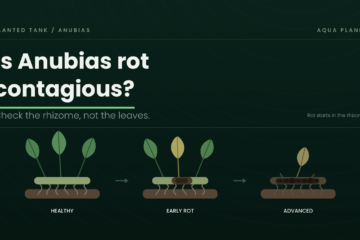
- Rhizome plants like Anubias barteri, Microsorum pteropus (Java fern), and Bucephalandra spp.: check the rhizome, that thick horizontal green stem. Firm rhizome means it will regrow.
- Stem plants like Rotala rotundifolia and Ludwigia repens: check the top few inches. If the tips are still solid and green, cut them off and replant just the tops.
- Bulbs like Aponogeton spp.: squeeze the bulb gently. Firm is alive, squishy is gone.
If the core is mushy, smells bad, or falls apart when you touch it, that plant is finished. Pull it out so it does not rot in your water.
Which plants melt the most, and how long recovery takes
Why Are My Aquarium Plants Melting? (And Will They Grow Back?
| Plant |
Melting |
Typical recovery |
| Cryptocoryne spp. |
High |
4 to 8 weeks |
| Echinodorus bleheri (Amazon sword) |
Moderate |
2 to 4 weeks |
| Vallisneria spp. |
Moderate |
2 to 4 weeks |
| Rotala rotundifolia |
Moderate |
1 to 3 weeks |
| Ludwigia repens |
Moderate |
1 to 3 weeks |
| Aponogeton spp. |
High (dormancy cycle) |
4 to 8 weeks |
| Microsorum pteropus (Java fern) |
Rare |
Fast, if rhizome healthy |
| Anubias barteri |
Rare |
Fast, if rhizome healthy |
| Bucephalandra spp. |
Rare |
Slow, several weeks |
That last group matters. If your Anubias or Java fern is melting, something actually is wrong, because these plants do not normally do this. Nine times out of ten the rhizome got buried in the substrate and rotted. Pull it up, tie it to rock or wood instead, and leave the rhizome exposed.
(more…)