Quick answer
The best aquarium fish for beginners are hardy freshwater species that are peaceful and forgiving of small mistakes while you learn. Most beginner tropical fish on this list fit a standard community tank. Zebra danios, guppies, platies, corydoras catfish, harlequin rasboras, ember tetras, cherry barbs, white cloud mountain minnows, bettas, and mollies are all good first choices. Most need a tank of at least 10 to 20 gallons, and the schooling species need to be kept in groups of six or more. The single biggest factor in beginner success is not which fish you pick, it is getting the tank cycled before the fish go in.
Most beginner fish lists are written by shops, and they tend to include a few species that are hardy but genuinely not suited to a first tank. Common goldfish is the usual offender.
If you are choosing fish for a first aquarium, this list is different in two ways. Every fish comes with the tank size it actually needs rather than the smallest one it will survive in, and there is a section at the end on the fish that get recommended to beginners but really should not be.
I keep angelfish and mollies in my own tanks, so a couple of these come from experience rather than research.
What makes a fish beginner friendly
Four things, and it is worth knowing them so you can judge any fish you see in a shop rather than relying on a list.
Tolerance of imperfect water. New tanks swing. A good starter fish is known for being forgiving when parameters drift, which is what people really mean when they ask for fish that survive beginner mistakes.
Peaceful temperament. Community fish for beginners need to get along. Aggressive species create problems a new keeper cannot diagnose yet, which is why peaceful freshwater fish make up most of this list.
A reasonable adult size. Plenty of hardy fish get far too large for a starter tank. Adult size matters more than the size in the shop.
Easy feeding. Anything that accepts standard flake or pellet food is one less variable, and it is a big part of what makes a fish low maintenance.
Notice that “cheap” is not on that list. Price and suitability are unrelated.
Beginner fish at a glance
| Fish | Tank size | Group size | Beginner rating | Heater |
|---|---|---|---|---|
| Zebra danio | 10 gal | 6+ | ★★★★★ | Often optional |
| Guppy | 10 gal | Small group | ★★★★★ | Yes |
| Platy | 10 gal | Small group | ★★★★★ | Yes |
| Harlequin rasbora | 20 gal | 6+ | ★★★★★ | Yes |
| Cherry barb | 15 gal | 6+ | ★★★★☆ | Yes |
| Ember tetra | 10 gal | 6+ | ★★★★☆ | Yes |
| Corydoras | 20 gal | 6+ | ★★★★☆ | Yes |
| White cloud minnow | 10 gal | 6+ | ★★★★☆ | Often optional |
| Betta | 5 gal | Single | ★★★★☆ | Yes |
| Molly | 20 gal | Small group | ★★★☆☆ | Yes |
All of these are freshwater fish for beginners, and the tank sizes above are what each one actually needs, not the smallest tank it will survive in.
The 10 best aquarium fish for beginners
1. Zebra danio (Danio rerio)
Tank size: 10 gallons and up Group: 6 or more Why: Among the most tolerant beginner fish when it comes to normal aquarium parameter fluctuations. They handle a wide temperature range and stay active and visible. Watch out: They are fast and energetic. In a small tank they can stress out slower, more placid fish.
2. Guppy (Poecilia reticulata)
Tank size: 10 gallons and up Group: Small groups, more females than males Why: Colourful, cheap, endlessly available, and completely undemanding about food. Watch out: They breed constantly. If you buy males and females, you will have babies within weeks and a lot of them. Buying all males avoids this.
3. Platy (Xiphophorus maculatus)
Tank size: 10 to 15 gallons Group: Small groups Why: All the hardiness of a guppy with a slightly sturdier body and just as much colour. One of the most forgiving fish you can buy. Watch out: Also a livebearer, so the same breeding situation applies.
4. Corydoras catfish (Corydoras spp.)
Tank size: 20 gallons Group: 6 or more, they are genuinely social Why: Peaceful bottom dwellers with real personality. They potter about the substrate all day and are entertaining to watch. Watch out: They need soft sand or smooth gravel. Sharp substrate damages their barbels, the whisker-like feelers they use to find food. And they are not a cleanup crew, they need feeding properly like any other fish.
5. Harlequin rasbora (Trigonostigma heteromorpha)
Tank size: 20 gallons Group: 6 or more Why: Calm, hardy, and they school tightly, which looks excellent in a planted tank. Less fragile than neon tetras despite a similar look. Watch out: Very little. This is one of the most trouble free fish on the list.
6. Ember tetra (Hyphessobrycon amandae)
Tank size: 10 gallons and up Group: 6 or more Why: Tiny, bright orange, peaceful, and they suit smaller tanks where bigger tetras would not. Watch out: Their size makes them a target for anything larger. Keep the tank mates small.
7. Cherry barb (Puntius titteya)
Tank size: 15 to 20 gallons Group: 6 or more Why: Barbs have a reputation for nipping, but cherry barbs are the calm exception. Hardy, red, and forgiving of a missed water change. Watch out: Males colour up best when there are females present, so mix the group.
8. White cloud mountain minnow (Tanichthys albonubes)
Tank size: 10 gallons and up Group: 6 or more Why: These can be kept without a heater in homes where room temperature stays within their preferred cooler range, which makes them useful for an unheated room. Watch out: Do not house them with tropical fish that need warmer water. Their temperature needs genuinely differ.
9. Betta (Betta splendens)
Tank size: 5 gallons minimum, and bigger is better Group: One male, alone Why: Striking, interactive, and they do not need a group, which suits a smaller setup. Watch out: The two things shops get wrong. They still need a heated, filtered, cycled tank, not a bowl. And males will fight other males and often harass long finned tank mates.
10. Molly (Poecilia sphenops)
Tank size: 20 gallons and up Group: Small groups, more females than males Why: Hardy, active, and available in a lot of colours. I keep mollies myself and they are undemanding once settled. Watch out: Two things people miss. They get bigger than expected, and they prefer harder water with more minerals than most soft water tropicals. If your tap water is very soft, they are less forgiving than a platy.
Fish often sold as beginner friendly that are not
This is the part most lists skip, and it is where new keepers lose fish.
Common goldfish. Hardy, yes. Suitable for a beginner tank, no. They reach a substantial size, produce a lot of waste, and need far more water volume and filtration than a typical starter setup. A goldfish in a 10 gallon tank is a slow problem, not a quick one.
Common pleco. Sold as a small algae eater. It grows to well over a foot, produces a heavy waste load, and stops eating much algae as it matures. Buy a smaller species if you want an algae eater.
Angelfish. I keep them, and I would not put them in a first tank. They grow tall, need real height and volume, and become territorial as they mature, particularly when they pair up. They are a good second or third tank fish.
Bala shark and iridescent shark. Both sold small, both grow far too large for a home aquarium.
Any fish you cannot find the adult size of. If the shop cannot tell you how big it gets, do not buy it that day. Look it up first.
The thing that matters more than which fish you pick
You can choose perfectly from the list above and still lose fish in the first month if you skip this.
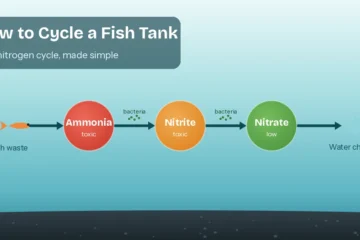
Cycle the tank before adding fish. A new aquarium has no beneficial bacteria to process fish waste. Ammonia builds up, then nitrite, and both are toxic. Cycling means running the tank and feeding that bacteria until it can handle the load, which usually takes several weeks. Most “hardy fish died anyway” stories are really cycling stories.
Buy a liquid test kit before you buy fish. You cannot see ammonia or nitrite, and strips are less reliable than a liquid kit. Without a test kit you are guessing at the one thing that actually kills beginner fish.
Do not overstock at the start. Add a small group, let the tank settle, then add more. A new tank cannot absorb a full stocking list at once.
Quarantine new fish if you can. New fish can arrive carrying problems, and adding them straight into your display tank spreads whatever they brought with them. Even a couple of weeks in a separate container makes a difference. New plants bring hitchhikers too, most commonly pest snails and their eggs.
Feed less than you think. Overfeeding is the most common beginner mistake and it drives most early problems, from cloudy water to detritus worm blooms to poor water quality.
Consider live plants. Almost every species here works as a beginner fish for a planted tank, and plants make the tank easier rather than harder. Plants take up nitrogen compounds, compete with algae, and give fish cover, which reduces stress. Start with something undemanding rather than a high light carpet. If algae does appear, Amano shrimp are one of the more effective grazers you can add.
Expect a settling in period. A new tank often goes through cloudy water, a bit of algae, and white fuzz on new driftwood. Most of it is normal and passes.
Common beginner mistakes
Most early fish losses come from one of these rather than from picking the wrong species.
Buying fish before the tank is cycled. The single biggest one. No beneficial bacteria means ammonia builds up and poisons the fish.
Buying too many fish at once. A new tank cannot process a full stocking list. Add small groups and wait.
Mixing aggressive species with peaceful ones. Bullying is hard for a beginner to spot and it stresses fish into illness.
Forgetting adult size. The fish in the shop is a juvenile. Check what it grows into before it comes home.
Overfeeding. More food means more waste, which means worse water. Feed what they finish in a couple of minutes.
Rinsing filter media under the tap. Chlorinated tap water kills the beneficial bacteria living in your filter. Always rinse media in old tank water instead.
Doing huge water changes to fix a problem. Large sudden changes swing parameters and stress fish further. Smaller, regular changes are safer.
How many fish can you keep?
The old “one inch of fish per gallon” rule is unreliable, because a single large-bodied fish produces far more waste than several small ones of the same total length.
A better approach for a beginner:
- Start with one small group of six of one species
- Wait three to four weeks and watch your water parameters
- Add the next group only if everything stayed stable
- Stop well before the tank looks full
Understocking is almost never a problem. Overstocking causes most of them.
Beginner aquarium shopping list
What you actually need before any fish come home:
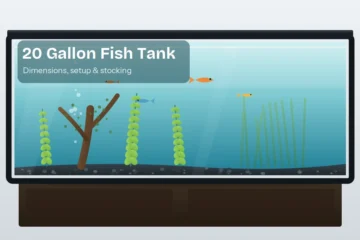
- Tank, 10 to 20 gallons for a first setup
- Filter rated for your tank size
- Heater, unless you are keeping cool water species only
- Thermometer, so you can verify the heater rather than trust it
- Water conditioner to remove chlorine and chloramine from tap water
- Liquid test kit for ammonia, nitrite, nitrate and pH
- Substrate, sand or smooth gravel if you plan on corydoras
- Fish food suited to the species you chose
- Gravel vacuum for water changes
- Net and a clean bucket used only for the aquarium
The test kit and the water conditioner are the two people skip most often, and they are the two that matter most in the first month.
FAQ
What is the easiest aquarium fish for beginners? Zebra danios and platies are among the most forgiving, and they are usually the answer when people ask which are the easiest fish to keep alive. Both tolerate a wide range of conditions, accept standard foods, and are peaceful with other community fish.
What size tank should a beginner start with? At least 10 gallons, and 20 gallons is easier. Larger volumes of water stay chemically stable for longer, which gives you more room to make mistakes.
Can beginners keep fish without a heater? Possibly, if you choose species suited to cooler water such as white cloud mountain minnows, and your room temperature stays within their preferred range year round. Most other fish on this list are tropical and need a heater.
How many fish can I put in a 10 gallon tank? A single small school of six small fish, such as ember tetras or white clouds, or one betta. Stock lightly and add slowly rather than filling it at once.
Do beginner fish need a filter? Yes. The filter houses the beneficial bacteria that process fish waste, so it is doing far more than keeping the water clear.
Why did my beginner fish die even though they are hardy? Most often because the tank was not cycled. Hardy species tolerate imperfect conditions, but ammonia and nitrite in an uncycled tank will kill almost anything.
Are goldfish good for beginners? They are hardy but they are not well suited to small starter tanks. They grow large and produce a lot of waste, so they need considerably more volume and filtration than most beginner setups provide.
What are the most low maintenance aquarium fish? Platies, guppies and zebra danios need the least intervention, since they accept standard food, tolerate a range of temperatures and do not require special water chemistry. No fish is maintenance free, but these come closest.
Which aquarium fish are least likely to die on a beginner? No fish is guaranteed to survive, but the species on this list are known for being forgiving. Far more beginner fish are lost to an uncycled tank than to choosing the wrong species.
Can I mix different beginner fish together? Usually yes, if they share temperature and temperament requirements and none are small enough to be eaten. Avoid mixing cool water species like white clouds with tropical fish.
Final word
Pick from the list, give schooling fish a proper group, and check the adult size of anything you buy rather than trusting the size in the tank at the shop.
Then do the unglamorous part. Cycle the tank first, stock slowly, and feed less than feels right. Those three things matter more than which species you choose, and they are why most beginner fish actually die.
Get that right, and almost every fish on this list will do well for you.