Quick answer: A basic fish tank setup takes one afternoon: put the tank on a level stand, rinse everything with plain water, add substrate, decor and plants, install the filter and heater, fill it with dechlorinated water, and switch everything on. The part most beginners get wrong is what comes next. A new tank isn’t ready for fish until it has cycled, which means growing the bacteria that break down fish waste, and that usually takes two to six weeks. Plan for about a day of setup, a few weeks of waiting, then add a small group of hardy fish. For a first tank, a 20 gallon long is the easiest size to get right.
Fish tank setup at a glance
| Detail | What to expect |
|---|---|
| Setup time | About 2 to 4 hours on day one |
| Wait before fish | Usually 2 to 6 weeks while the tank cycles |
| Best beginner size | 20 gallon long (30 x 12 x 12 in) or a 29 gallon |
| Weight once set up | Roughly 10 lb per gallon, so about 200 lb for a 20 gallon |
| Typical starting cost | About $250 to $600 for a 20 gallon, depending on kit or separate parts |
| Must-have equipment | Tank, stand, filter, heater, light, lid, substrate, water conditioner, test kit |
| Hardest part | Waiting for the cycle before adding fish |
Basic tank, planted tank or kit: which fish tank setup is right for you?
| All-in-one kit | Basic tank (gravel and decor) | Low-tech planted tank | |
|---|---|---|---|
| What it is | Tank, lid, light and filter sold together | Glass tank, gravel or sand, artificial or no plants | Aquarium soil or root tabs, easy live plants, no CO2 |
| Rough cost (20 gallon) | Lowest | Middle | Middle to higher |
| Setup difficulty | Easiest | Easy | Easy to moderate |
| Water stability | Good | Good | Best, since plants soak up waste |
| Main downside | Weak lights and filters in cheap kits | More algae, less natural look | Some plants melt at first |
| Best for | Tight budgets, first-timers | People who want simple and low effort | Anyone who wants the healthiest tank |
Here’s the honest part most setup guides rush past. The setup itself is the easy bit. Most new fishkeepers lose fish in the first month not because they set the tank up wrong, but because they added fish before the tank was ready. If you only take one thing from this guide, make it this: the waiting is part of the setup.
Fish tank setup checklist
Get everything on this list before you start, so you’re not running to the store halfway through.
| Item | What to look for |
|---|---|
| Tank | 20 to 29 gallons for a first tank. See our 20 gallon tank dimensions guide |
| Stand | Built for aquariums, matching the tank’s exact footprint |
| Filter | Rated for your tank size or a little more. Sponge or hang-on-back for beginners |
| Heater | Adjustable, about 3 to 5 watts per gallon for tropical fish |
| Light | LED that matches the tank length. Stronger if you want live plants |
| Lid | Stops jumping fish and slows evaporation |
| Substrate | Gravel or sand for a basic tank, aquarium soil for a planted tank |
| Decor and hardscape | Aquarium-safe rock and wood. See our fish tank decorations guide |
| Plants | Easy, low-light species to start. See our low light aquarium plants guide |
| Water conditioner | Removes chlorine and chloramine from tap water |
| Test kit | Liquid kit for ammonia, nitrite, nitrate and pH |
| Ammonia source | Bottled ammonia or fish food, for fishless cycling |
| Bucket and siphon | A bucket used only for the aquarium, and a gravel vacuum |
| Thermometer | So you know the heater is doing its job |
How to set up a fish tank step by step
- Pick the spot. Choose a level, solid floor away from direct sunlight, heating and cooling vents, and doors that slam. Make sure there’s an outlet nearby and room behind the tank for the filter and cables.
- Set up the stand. Place the stand where it will stay and check it with a level. A full tank can’t be moved, so get this right first.
- Rinse the tank and test for leaks. Wipe the tank with plain water only, never soap. Fill it partway, wait a few hours, and check the seams and the floor for drips. Then empty it.
- Add the substrate. Rinse gravel or sand in a bucket until the water runs mostly clear. Aquarium soil usually goes in without rinsing. Aim for about 2 inches, sloping a little higher at the back.
- Place rocks and wood. Set hardscape directly on the substrate so it can’t topple. Soak new driftwood beforehand so it sinks and leaches less.
- Plant, if you’re going planted. Push roots into the substrate with your fingers or tweezers. Attach plants like anubias and java fern to wood or rock instead of burying them.
- Install the filter and heater. Position the heater near the filter flow so warm water spreads around the tank. Don’t plug either one in yet.
- Fill the tank slowly. Pour water onto a plate or a plastic bag laid on the substrate so it doesn’t wash everything around. Add water conditioner for the full tank volume.
- Turn everything on. Start the filter, then wait about 15 to 30 minutes before plugging in the heater so it can adjust to the water temperature. Set it for your fish, usually 76 to 78 F (24 to 26 C). Put on the lid and light.
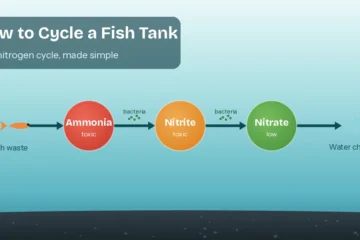
- Cycle the tank before adding fish. Add an ammonia source and test every few days. The tank is ready when ammonia and nitrite read zero within 24 hours of adding ammonia, and nitrate is showing. Our guide to cycling a fish tank walks through it.
Watch a planted 20 gallon setup
Here’s a planted 20 gallon bowfront setup I filmed for my YouTube channel, AQUA PLANET 128. You can see each layer go in: about 1.5 to 2 inches of aquarium soil with a nutrient powder sprinkled over it, a white sand corner at the front, driftwood placed straight onto the soil, and then Amazon swords, red Ludwigia repens and pearl weed planted before the water went in. It runs on a simple internal filter and the hood light, with no CO2 or liquid fertilizer.
One thing to know before you copy it: the video skips straight from filling the tank to the fish going in. In real life, that gap is where the cycle happens. Fill, plant and run the tank for a few weeks first, then add your fish.
Fish tank setup timeline
| When | What happens | What you do |
|---|---|---|
| Day 1 | Setup, fill, equipment running | Steps 1 to 9 above |
| Days 2 to 7 | Water may go cloudy, wood may grow white fuzz | Start adding ammonia, test every few days |
| Weeks 1 to 3 | Ammonia drops, nitrite rises | Keep dosing ammonia and testing |
| Weeks 2 to 6 | Nitrite drops to zero, nitrate appears | Confirm the cycle, then do a big water change |
| After the cycle | Tank is ready for fish | Add a small group of hardy fish |
| 2 to 4 weeks later | Bacteria catch up with the new fish | Add the next group, one at a time |
A little cloudy water and some white fuzz on new driftwood in the first week are both normal. Our white fuzz guide explains why it happens and when it clears.
How much does a fish tank setup cost?
| Tank size | Typical starting cost | Notes |
|---|---|---|
| 10 gallon | About $100 to $150, plus fish | Cheap to start, but harder to keep stable |
| 20 gallon | About $250 to $300 as a kit, $400 to $600 with separate parts | The best balance of cost and stability |
| 40 gallon | About $700 to $1,000 | More forgiving, but a bigger stand and more gear |
Prices vary a lot by brand and where you live, so treat these as rough guides. The usual budget mistakes are buying a cheap filter and an undersized heater, then replacing them a month later. Spending a little more on those two parts saves money overall. Running costs after setup are small: mostly electricity, water conditioner and food.
Sizing your equipment
| Tank | Heater | Filter rating | Light length |
|---|---|---|---|
| 10 gallon | About 50 W | 10 to 20 gallons | 20 in |
| 20 gallon high | About 75 to 100 W | 20 to 30 gallons | 24 in |
| 20 gallon long | About 75 to 100 W | 20 to 30 gallons | 30 in |
| 29 gallon | About 100 to 150 W | 30 to 40 gallons | 30 in |
| 40 gallon breeder | About 150 W | 40 to 60 gallons | 36 in |
Go for the higher heater wattage if your room gets cold in winter. For much bigger tanks, see our 150 gallon fish tank guide.
Setting up a planted fish tank
Live plants are the single best upgrade for a new tank. They soak up waste, compete with algae and give fish cover, and a simple low-tech planted tank is barely more work than a plain one.
Substrate. Aquarium soil gives root-feeding plants a head start. If you’d rather use plain gravel or sand, add root tabs under heavy feeders like Amazon swords. Our DIY root tabs guide shows a cheap way to make them.
Plants to start with. Pick easy, low-light species: anubias, java fern, java moss, crypts, Amazon swords and hornwort. Fast growers help most in a new tank, since they use up nutrients that algae would otherwise grab.
Plant before you fill. It’s much easier to plant into damp substrate than to work through a full tank of water, and plants stay put better.
Expect some melting. Many plants drop leaves in their first couple of weeks as they adjust. That’s normal, and our plants melting guide explains which ones bounce back.
Adding your first fish
Once the tank is cycled, start small. Add a few hardy fish, wait two to four weeks, test the water, then add more. Adding a full stock at once overwhelms the bacteria and causes an ammonia spike.
Choose fish that suit your tank size and water. Our best aquarium fish for beginners list covers the hardiest options. Float the bag for 15 to 20 minutes to match temperature, then net the fish into the tank and throw away the store water instead of pouring it in.
Common fish tank setup problems
Cloudy water in the first week. Usually a harmless bacterial bloom or fine substrate dust. Leave it alone and it normally clears in a few days to two weeks.
Fish dying in the first month. Almost always ammonia or nitrite from an uncycled tank. Test the water, do a large water change with conditioner, and feed very lightly until the cycle catches up.
White fuzz on new driftwood. Harmless biofilm. Brush it off and it fades within a few weeks.
Algae bloom after a month. Too much light or too few plants. Cut the light to 6 to 8 hours a day and add fast-growing plants.
Plants melting or turning brown. Normal adjustment for many plants. Trim the dead leaves and give them time.
Temperature won’t stay steady. The heater is too small or in a dead spot. Move it into the filter flow or upgrade the wattage.
Water on the floor. Check whether it’s a seam leak, filter overflow or splashing from the lid. A tank that leaked during the leak test should never be filled again.
FAQ
How long should I wait before adding fish to a new tank?
Until the tank has cycled, which usually takes two to six weeks. Test for ammonia and nitrite: the tank is ready when both read zero within 24 hours of adding ammonia.
What do I need to set up a fish tank?
A tank, a stand, a filter, a heater, a light, a lid, substrate, water conditioner and a test kit. Plants, decor and a bucket and siphon complete the setup.
What is the best fish tank size for beginners?
A 20 gallon long or a 29 gallon. They hold enough water to stay stable but are still easy to fit and maintain.
Can I use tap water in a fish tank?
Yes, as long as you treat it with a water conditioner that removes chlorine and chloramine.
Should I add plants before or after filling the tank?
Before, if you can. Planting into damp substrate is easier and plants stay in place better. Then fill slowly so you don’t wash them out.
How much does it cost to set up a fish tank?
Roughly $100 to $150 for a 10 gallon and $250 to $600 for a 20 gallon, depending on whether you buy a kit or separate equipment.
How long does it take to set up a fish tank?
The physical setup takes a few hours. Getting the tank ready for fish takes another two to six weeks of cycling.