Quick answer: Bladder snails (Physella acuta, also called Physa acuta) are tiny freshwater snails with a thin, see-through, teardrop-shaped shell that opens on the left side. They grow to about 0.4 to 0.6 inches (1 to 1.5 cm), live a few months to about a year, and lay small, clear jelly egg clutches on glass and plants. Each snail is both male and female and can even fertilize itself, so one hitchhiker on a new plant can start a colony. They’re harmless to fish, shrimp and healthy plants, and they eat algae, leftovers and dead leaves. What most people get wrong is treating them as the problem. A bladder snail boom always means there’s too much food in the tank.
Bladder snail at a glance
| Detail | Bladder snail |
|---|---|
| Scientific name | Physella acuta (also Physa acuta) |
| Other names | Acute bladder snail, tadpole snail, pest snail |
| Family | Physidae |
| Origin | Thought to be North America, now found worldwide |
| Adult size | About 0.4 to 0.6 in (1 to 1.5 cm) |
| Shell | Thin, glossy, see-through, left-handed (opening on the left) |
| Lifespan | A few months to about 1 year |
| Temperature | Very wide, about 50 to 85 F (10 to 29 C) |
| pH | About 6.5 to 8.0, best above 7 |
| Breathing | Breathes air at the surface and through its skin |
| Trapdoor (operculum) | No |
| Reproduction | Hermaphrodite, can self-fertilize, lays jelly egg clutches |
| Diet | Algae, biofilm, leftover food, dead plant matter |
| Safe with | Fish, shrimp, other snails and healthy plants |
| Care level | Extremely easy |
Bladder snail vs pond snail vs ramshorn vs baby mystery snail: which do you have?
| Snail | Shell shape | Shell opening | Tentacles | Trapdoor | Eggs |
|---|---|---|---|---|---|
| Bladder snail | Small, oval, thin and glossy, short pointed tip | Left side | Thin and thread-like | No | Small clear jelly clutches underwater |
| Pond snail (Lymnaea) | Taller, pointed spire | Right side | Flat and triangular | No | Long jelly strips underwater |
| Ramshorn snail | Flat coil | Side of the coil | Long and thin | No | Round jelly clutches |
| Baby mystery snail | Round, thicker | Right side | Long, plus a breathing tube | Yes | Pink or white clutch above the water |
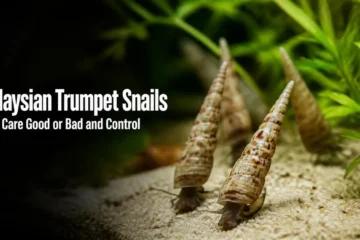
| Malaysian trumpet snail | Tall, narrow cone | Right side | Short | Yes | None, gives live birth |
The quick test. Hold the snail with the pointed tip up and the opening facing you. If the opening is on the left, it’s a bladder snail. If it’s on the right, it’s something else, usually a pond snail.
Here’s the honest part most bladder snail guides leave out. Bladder snails can’t breed past their food supply. Ten snails in a tank where the fish eat everything stay ten snails, or slowly die off. Hundreds of them means there’s spare food: overfeeding, uneaten pellets, or melting plants. That’s useful information, because the same extra food also feeds algae, detritus worms and planaria. Fix the feeding, and the snails fix themselves.
Are bladder snails good or bad?
| Good | Bad |
|---|---|
| Eat soft algae, biofilm and leftover food | Breed very fast when there’s extra food |
| Clean up dead and melting leaves | Egg clutches and snails on the glass look messy |
| Safe with fish, shrimp and healthy plants | Hard to remove completely once established |
| Live food for puffers, loaches and assassin snails | Can clog filter intakes in huge numbers |
| Show you when you’re overfeeding | Arrive uninvited on new plants |
In most planted tanks and shrimp tanks, a small population is helpful. They’re less welcome in show tanks and in breeding tanks where you want every egg clutch on the glass to be your own.
Appearance
Bladder snails have a small, smooth, shiny shell, usually tan, light brown or almost clear, often with darker speckles on the body showing through. The shell has a short pointed spire and a long opening on the left side. The body is gray with dark flecks, with thin tentacles and dark eyes at the base. They have no trapdoor. They move quickly for a snail and often hang upside down at the water surface or ride a string of slime up and down.
Where do bladder snails come from?
- New live plants, by far the most common source. Snails and egg clutches hide under leaves and in roots.
- Decor, rocks or wood from another tank
- Water or nets from shops and other hobbyists’ tanks
- Fish bags that contain a stray snail or egg clutch
How to keep them out. Check new plants carefully, especially under the leaves. Rinse them well, and either quarantine them in a bucket for a couple of weeks or use a plant dip made for removing snails before adding them.
Bladder snail eggs and breeding
Self-fertilizing hermaphrodites. Every bladder snail is both male and female. They usually mate with each other, but a single snail can fertilize itself.
What the eggs look like. Small, clear, flat jelly blobs, usually oval or crescent shaped and about 0.2 to 0.5 inches across, with tiny dots inside. Each clutch holds roughly 5 to 30 eggs. You’ll find them on the glass, under leaves, on decor and on filter tubes, always underwater.
How fast they hatch. Eggs usually hatch in about 1 to 2 weeks, faster in warm water.
How fast they grow. Young snails can start laying eggs in about 4 to 6 weeks, which is why numbers can jump so quickly.
For help telling their eggs from other snails’ eggs, see our aquarium snail eggs guide.
What do bladder snails eat?
- Soft algae, diatoms and biofilm
- Leftover fish food and sinking pellets
- Detritus and fish waste
- Dead, rotting and melting plant leaves
Do bladder snails eat plants? Not healthy ones. They eat leaves that are already dying. If you see holes in a plant covered in snails, the leaf was usually damaged or melting first.
Are bladder snails safe with shrimp and fish?
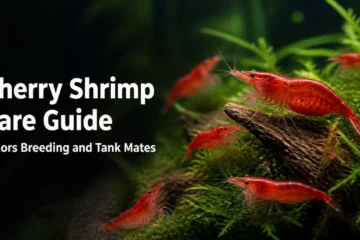
Shrimp: yes, including baby shrimp. They share the same food, so in a shrimp breeding tank, keep their numbers down by feeding carefully. Our cherry shrimp guide covers shrimp tank feeding.
Fish: yes, they can’t hurt fish.
Other snails: yes. They live peacefully with nerites, mysteries and ramshorns.
How to get rid of bladder snails
Getting every last one is very hard, but keeping them under control is easy once you deal with the food. Start with the safest steps.
- Feed less. Only what your fish finish in about 2 minutes. This is the most important step.
- Vacuum the substrate and remove dead or melting leaves.
- Trap them overnight. Put a slice of blanched zucchini, cucumber or lettuce, or an algae wafer, on a dish or in a mesh bag after lights-out. In the morning, lift it out covered in snails.
- Scrape off egg clutches from the glass with a razor blade or card during water changes.
- Remove snails by hand when you see them, especially at night.
- Add assassin snails, which eat bladder snails readily. See our assassin snail guide.
- Snail-eating fish, like pea puffers and yoyo, zebra or clown loaches, only in tanks without shrimp and with enough space.
What not to do. Avoid copper-based snail killers. They also kill shrimp and other snails, and a sudden mass die-off can rot in the tank and spike ammonia.
What eats bladder snails?
| Predator | How well | Shrimp safe? |
|---|---|---|
| Assassin snails | Very good | Usually yes with adult shrimp |
| Pea puffers | Excellent | No |
| Yoyo, zebra and clown loaches | Very good | No |
| Bettas and gouramis | Sometimes, mostly babies and eggs | May eat baby shrimp |
| Some cichlids | Good | No |
Common bladder snail problems
Hundreds of snails on the glass. Too much food. Feed less and trap for a couple of weeks.
Jelly blobs everywhere. Bladder snail egg clutches. Scrape them off and fix the feeding.
Snails all at the surface. They breathe air, so a few at the top is normal. Lots of them crowding the surface can mean low oxygen, so add surface movement and test the water.
Snails came back after cleaning. Eggs and tiny babies survived. Keep up lighter feeding and trapping.
Holes in plant leaves. Usually the leaf was already damaged or melting. Check your lighting and fertilizer.
Thin, cracked shells. Low pH or soft water. Add crushed coral or cuttlebone.
Snails in the filter. Add a sponge prefilter to the intake.
FAQ
Are bladder snails bad for my aquarium?
No. They’re harmless to fish, shrimp and healthy plants, and they clean up leftovers. They only become a nuisance when overfeeding lets their numbers explode.
How big do bladder snails get?
About 0.4 to 0.6 inches (1 to 1.5 cm).
How long do bladder snails live?
Usually a few months to about a year, depending on temperature and food.
What do bladder snail eggs look like?
Small, clear, flat jelly blobs with tiny dots inside, stuck to glass, plants or decor underwater.
How do I get rid of bladder snails?
Feed less, vacuum the substrate, trap them overnight with blanched vegetables, scrape off egg clutches, and add assassin snails.
What eats bladder snails?
Assassin snails, pea puffers and loaches like yoyo, zebra and clown loaches.
Can one bladder snail reproduce alone?
Yes. They’re hermaphrodites and can fertilize themselves, so a single snail can start a colony.
How can I tell a bladder snail from a pond snail?
Bladder snails have a shell opening on the left side and thin, thread-like tentacles. Pond snails open on the right and have flat, triangular tentacles.

2 Comments
Assassin Snail Care Guide Diet Eggs and Pest Snail Control · October 20, 2026 at 8:44 am
[…] Bladder and pond snails […]
Aquarium Snail Eggs ID Chart and What To Do About Them · October 20, 2026 at 8:45 am
[…] Bladder snail […]
Comments are closed.