Quick answer
White fuzzy mold on aquarium plants is almost always harmless. In new tanks it is usually a water mold or biofilm growing on decaying organic matter, dead leaves, uneaten food, or freshly submerged wood and plants. It feeds on decomposition, not on living plant tissue, and in most new setups it clears on its own within a few weeks as the tank matures. You can speed it up by removing the decaying matter it feeds on, siphoning the fuzz off, and adding a cleanup crew like snails or shrimp. It is not the same as the white fungus that grows on sick fish, and it very rarely harms healthy plants.
You set up a new planted tank, everything looks great for a week, and then a leaf or a piece of wood grows a patch of white, cottony fuzz.
It looks like something is rotting or diseased. In almost every case, it is not.
This is one of the most common things new planted-tank keepers panic about, and one of the least dangerous. Here is what the fuzz actually is, why it appears, how to clear it, and the one situation where it is worth a closer look.
What is the white fuzzy mold on aquarium plants?
The white fuzz is usually a harmless microbial growth, most often biofilm or water mold, feeding on decomposing organic material in the tank.
Despite the cottony, fungus-like look, biofilm and water molds are the two most common causes. The water molds belong to a group of organisms in the order Saprolegniales, and biofilm is made up of bacteria and other microorganisms. They colonise surfaces that are releasing nutrients: dead or melting leaves, uneaten food, and newly submerged wood and plants.
The cottony, fuzzy look comes from thread-like filaments that trap tiny particles and microorganisms, which is what gives the growth its cotton-wool texture.
The key point is what they feed on. These growths live on decaying organic matter, not on healthy living plant tissue. That is why the fuzz shows up on dying leaves, fresh driftwood and new plants, and not on a thriving established plant. It is a decomposer doing its job, not a disease attacking your plants.
Why it appears, especially in new tanks
A new aquarium is the perfect environment for this fuzz, and there are a few clear reasons.
New tank syndrome. Freshly submerged wood and plants leach sugars and other carbohydrates into the water. Those nutrients feed a bloom of mold and biofilm until the tank’s microbial balance settles.
Melting or dying plant leaves. Plants adjusting to a new tank often shed leaves, and that decaying leaf matter is exactly what the mold feeds on. Tissue-cultured and emersed-grown plants especially tend to melt during the switch to growing underwater, creating a lot of exactly the kind of decaying material this fuzz feeds on. This is why fuzz and plant melt often show up together.
Freshly added driftwood. New wood is one of the most common places to see it. Untreated wood releases a lot of organic matter early on, and a white biofilm across its surface in the first weeks is extremely common and harmless.
Overfeeding. Excess food settling on leaves and substrate gives the mold more to grow on. This is the one cause that also applies to established tanks, not just new ones.
In a new tank, all of this is part of the normal cycling and settling process. The tank is finding its balance, and the fuzz is a visible stage of that. If you are also seeing tiny white worms in the substrate around the same time, those are usually detritus worms, another harmless sign of the same new-tank waste.
Is white fuzzy mold harmful to fish, shrimp or plants?
In almost all cases, no.
It does not attack healthy plants. It grows on dead and decaying matter, not living tissue, so a healthy plant is not its food.
It is generally not harmful to fish or shrimp. In fact, shrimp and many snails will graze on it, treating it as food.
It usually clears on its own. As the tank matures and the initial flush of leachable nutrients is used up, the mold loses its food supply and dies back. In most new tanks this happens within a few weeks.
So in the typical case, a new tank with white fuzz on the wood or on melting leaves, the honest answer is that you can leave it alone and it will pass.
How to get rid of white fuzzy mold on aquarium plants
If you would rather not wait, or the amount is bothering you, you remove the fuzz by removing its food source. No chemicals needed.
Remove the decaying matter it feeds on. Trim away dead, melting or heavily affected leaves. Take out any uneaten food. Cut off the food supply and the mold has nothing to grow on.
Siphon or brush it off. Gently siphon the fuzz off during a water change, or brush it away with a clean, dedicated soft toothbrush. On driftwood you can lift the wood out and scrub it.
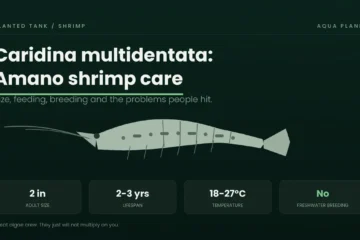
Add a cleanup crew. Snails such as Nerite or Mystery snails, and freshwater shrimp such as Amano shrimp, will graze the fuzzy layer as food. Many keepers find the fuzz vanishes within days of adding shrimp.
Keep up water changes and gentle flow. Regular water changes reduce excess organic waste and improve overall water quality, making conditions less favourable for continued mold growth, and decent water movement discourages it from settling.
Be patient with a new tank. If the tank is only a few weeks old, the most effective thing you can do is often nothing. It clears as the tank matures.
You do not need antifungal chemicals for this, and reaching for them risks your beneficial bacteria and livestock for a growth that was going to disappear anyway.
When white fuzz is actually a problem
Most of the time the fuzz is harmless, but there are a couple of cases worth knowing so you are not falsely reassured.
White fungus on fish. A cottony white growth on a fish’s body or fins is a different thing entirely. That is a fish health issue, often linked to injury or poor water quality, and it needs treating as such. The mold on your plants and wood is not the same as the fungus on a sick fish, even though they can look similar.
Fuzz on a healthy, living leaf that keeps spreading. The normal harmless fuzz grows on dead and decaying matter. If you are certain a growth is spreading across healthy living tissue rather than sitting on dying leaves or wood, that is worth watching more closely and improving your tank maintenance, since it usually still traces back to excess organic waste.
A tank that never settles. If the fuzz is still blooming heavily months after setup, that points to an ongoing source of decay, usually overfeeding, a dead animal or plant matter hidden in the substrate, or a filter that needs cleaning. In that case you are not fighting mold, you are fixing a waste problem.
None of these are the usual case. The usual case is a new tank, a bit of fuzz on wood or melting leaves, and a few weeks of patience.
Mistakes to avoid
Dosing chemicals straight away. Harmless mold does not justify antifungal treatments that can harm shrimp and beneficial bacteria.
Tearing the tank apart. Completely unnecessary. Trim the decaying matter and let the tank settle.
Assuming it is killing your plants. It grows on already-dead matter. The melting leaf caused the fuzz, not the other way around.
Panicking over new driftwood fuzz. White biofilm on fresh wood in the first few weeks is one of the most normal things in the hobby.
Overfeeding to compensate for anything. More food means more decay means more mold. Feed less, not more.
FAQ
[faq]
Q: Is white fuzzy mold on aquarium plants harmful?
A: In almost all cases it is harmless. It is usually a water mold or biofilm growing on decaying organic matter, not on living plant tissue, and it does not typically harm fish, shrimp or healthy plants. It usually clears on its own as a new tank matures.
Q: Why is there white fuzzy mold on my aquarium plants after planting them?
A: It grows on decomposing organic material, which is abundant in new tanks. Freshly submerged wood and plants leach nutrients, and melting leaves and uneaten food feed the mold. It is a normal stage of a new tank settling.
Q: Will white fuzzy mold go away on its own?
A: Usually yes. As the tank matures and the initial nutrients are used up, the mold loses its food source and dies back, most often within a few weeks in a new tank.
Q:How do I get rid of white fuzz on aquarium plants?
A: Remove the decaying matter it feeds on by trimming dead leaves and clearing uneaten food, siphon or brush the fuzz off, and add a cleanup crew such as snails or shrimp that graze on it. Chemicals are not needed.
Q: Do shrimp and snails eat white fuzzy mold?
A: Yes. Amano shrimp and snails such as Nerite and Mystery snails will graze on the fuzzy biofilm, and many keepers find it disappears within days of adding them.
Q: Is the white fuzz on my plants the same as the fungus on my fish?
A: No. Cottony white growth on a fish’s body or fins is a fish health problem and needs separate treatment. The mold on plants and wood grows on decaying matter and is a different, generally harmless thing, even though they can look similar.
Q: Is white fuzzy mold the same as white algae?
A: Not usually. White fuzz on new wood and dying leaves is typically water mold or biofilm feeding on decay. White or pale hair algae is a different growth. If it is stringy and attached to healthy surfaces rather than cottony on decaying matter, you may be dealing with algae instead.
[/faq]
Final word
White fuzzy mold on aquarium plants looks alarming and almost never is. It is a water mold or biofilm feeding on decaying matter in a young tank, it does not attack healthy plants, and it usually clears within a few weeks on its own.
If you want it gone sooner, remove the dead matter it feeds on, siphon it off, and let snails or shrimp graze the rest. Skip the chemicals.
The only versions worth a closer look are cottony growth on a fish rather than a plant, or fuzz that keeps blooming months after setup, which points to a waste problem rather than a normal new-tank phase.

0 Comments