Quick answer: A standard 29 gallon fish tank measures 30 x 12 x 18 inches (76 x 30 x 46 cm). It weighs about 40 to 45 pounds empty and roughly 300 to 330 pounds once it is filled with water, substrate and decor, so it needs a real aquarium stand, not a dresser or a bookshelf. It has the same footprint as a 20 gallon long, just 6 inches taller, which makes it one of the best beginner sizes: big enough for a proper community of schooling fish, small enough to fit most rooms. The mistake most people make is stocking it by the “inch per gallon” rule. Think in groups and adult sizes instead. A 29 suits a school of 10 to 15 small tetras or rasboras, a group of corydoras and one centerpiece fish, but not goldfish, oscars, common plecos or silver dollars.
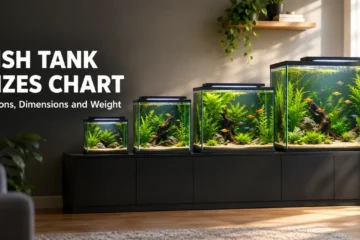
See every size side by side in our fish tank sizes chart.
29 gallon fish tank at a glance
| Detail | Standard 29 gallon |
|---|---|
| Dimensions (L x W x H) | 30 x 12 x 18 in (76 x 30 x 46 cm) |
| Real water volume | About 28 US gallons (106 L) before substrate and decor |
| Weight empty | About 40 to 45 lb (18 to 20 kg) for a glass tank |
| Weight filled | About 300 to 330 lb (135 to 150 kg) with substrate and decor |
| Footprint | 30 x 12 in, the same as a 20 gallon long |
| Filter | Rated for 120 to 200 GPH (about 4 to 7 tank turnovers an hour) |
| Heater | 100 to 150 watts |
| Light and lid | 30 inch light and 30 x 12 in lid |
| Good for | Community fish, planted tanks, shrimp, a betta centerpiece |
| Not suitable for | Goldfish, oscars, common plecos, silver dollars, large cichlids |
29 gallon fish tank dimensions
Almost every 29 gallon glass tank sold in the US, including the common Aqueon, Marineland and Tetra models, uses the same 30 x 12 x 18 inch size. Rimmed tanks can be a fraction of an inch wider because of the plastic frame, and rimless or acrylic tanks vary a little more, so always measure your space with the brand’s listed outside dimensions.
Why it is not quite 29 gallons. Multiply the inside measurements and divide by 231 and you get just over 28 US gallons. Once you add 2 inches of sand or gravel, rocks and wood, and leave an inch of air at the top, you are usually holding 23 to 25 gallons of water. That is normal for every tank size, and it is the number to use for medication and fertilizer doses. Our aquarium volume calculator works out your real water volume in seconds.
Why the height matters. At 18 inches tall, a 29 gives you 6 extra inches of water over a 20 long without taking any more floor or stand space. That extra depth helps tall plants, swimming room for mid-water fish and a more dramatic aquascape. The trade-off is a little less gas exchange per gallon and a reach of 18 inches to the bottom, so long aquascaping tweezers are worth having.
29 gallon vs 20 long vs 30 gallon: which size should you get?
These tanks are sold side by side, and their numbers are close enough to be confusing.
| Tank | Dimensions (in) | Footprint | Filled weight | Best for |
|---|---|---|---|---|
| 20 gallon long | 30 x 12 x 12 | 30 x 12 | About 225 lb | Bottom dwellers, shrimp, low profile scapes |
| 20 gallon high | 24 x 12 x 16 | 24 x 12 | About 225 lb | Small spaces, tall plants |
| 29 gallon | 30 x 12 x 18 | 30 x 12 | About 300 to 330 lb | All-round community and planted tanks |
| 30 gallon | 36 x 12 x 16 | 36 x 12 | About 340 lb | Active swimmers that need length |
| 40 gallon breeder | 36 x 18 x 16 | 36 x 18 | About 450 to 480 lb | Bigger communities, angelfish, more stocking room |
Here is the honest part most guides leave out. For most fish, length and footprint matter more than gallons. A 29 and a 20 long have exactly the same floor area, so for corydoras, loaches and other bottom dwellers they are almost identical. The 29 wins on swimming height and water volume, which gives you more stable water and a little more stocking room. If you can fit a 36 inch tank, a 30 gallon or a 40 breeder gives fast schooling fish more of the length they actually use.
How much does a 29 gallon fish tank weigh?
An empty glass 29 gallon weighs about 40 to 45 pounds. Water weighs about 8.3 pounds per gallon, so the water alone adds roughly 200 to 235 pounds. Add 25 to 35 pounds of gravel or sand plus rocks and wood, and a fully set-up 29 gallon usually lands between 300 and 330 pounds.
What that means for your floor. A normal wooden floor in a house handles a 29 gallon without trouble, especially near or across a wall. Spread the weight over the full stand base, keep it away from the middle of a long, bouncy span, and check that the floor is level before you fill it.
Move it empty. Never move a 29 with water or substrate in it. The weight twists the frame and can crack a seam. Drain it fully, take the substrate out, and then move it.
29 gallon fish tank stand
A 29 is too heavy for ordinary furniture. Dressers, desks and bookshelves are built to carry weight on their shelves or drawers, not 300 pounds sitting on the top edge, and they sag or bow over time.
What to look for. Choose a stand made for aquariums and rated for at least a 29 gallon. Its top should support the whole bottom frame of the tank, with no part hanging over the edge. A 30 x 12 inch stand from a matching brand is the simplest choice, and many are sold as “20 long and 29 gallon” stands because the footprint is the same.
Steel or wood. Steel frame stands are strong, light and cheap. Wooden cabinet stands hide your equipment and look neater in a living room. Avoid particle board stands near spills, because water swells the board and weakens it.
Level matters. Put a spirit level on the empty stand, then on the tank before you add water. A tank that leans puts stress on one seam. Shim the stand under its legs, not under the glass.
Kits. 29 gallon kits from brands like Aqueon and Tetra often come with a hood, a light and a basic filter. They are a good value starting point, but the included filter is usually on the small side for a fully stocked tank, and the light is often too weak for anything beyond easy low light plants.
Equipment for a 29 gallon tank
Filter. Look for a filter rated for 120 to 200 gallons per hour. A hang-on-back filter made for 30 to 40 gallon tanks is the easiest option for beginners. A large sponge filter or two works well for shrimp and fry tanks, and a small canister suits heavily planted tanks if you want the equipment hidden.
Heater. A 100 watt heater is enough in a warm room, and a 150 watt heater is better if the room gets cold in winter. Most tropical community fish want 74 to 78°F (23 to 26°C).
Light. Get a 30 inch fixture, or one that adjusts to 30 inches. Basic LEDs grow low light aquarium plants like anubias, java fern, crypts and mosses. Brighter planted-tank lights let you grow stem plants and carpets, and at 18 inches deep you need a little more light than in a 20 long to reach the bottom.
Substrate. Plan on 25 to 35 pounds for a 2 inch layer. Use smooth sand or fine gravel if you plan to keep corydoras, and add root tabs under root-feeding plants if you use inert gravel or sand.
Lid. A glass or mesh lid stops fish like hatchetfish, killifish and some gouramis from jumping, and it slows evaporation.
For the full setup order, from rinsing substrate to adding fish, see our fish tank setup guide.
How many fish can you put in a 29 gallon tank?
Forget the old “one inch of fish per gallon” rule. It treats a 1 inch neon and a 10 inch oscar the same, and it ignores how much waste each fish makes. Instead, plan around three things: the adult size of each fish, the group size it needs to feel safe, and your filtration.
As a rough guide, a cycled and well-filtered 29 gallon comfortably holds:
- one school of 10 to 15 small fish like neon tetras, galaxy rasboras or ember tetras
- a bottom group of 6 to 8 small corydoras
- one centerpiece fish or a small group of gouramis, and
- a cleanup crew of snails and shrimp
Our aquarium stocking calculator checks a list of fish against your tank size and filter, so you can see how close you are to full before you buy.
Add fish slowly. Only stock a fully cycled tank, and add one group at a time with a week or two in between. Adding everything on day one overloads the bacteria and is the most common way new tanks lose fish, often with cloudy water as the first warning sign.
29 gallon stocking ideas
These are complete, proven combinations that share water needs and get along. Pick one and build around it rather than mixing them.
| Stocking idea | Fish and inverts | Temperature | Notes |
|---|---|---|---|
| Classic community | 12 neon tetras, 6 panda or bronze corydoras, 1 honey gourami, 1 bristlenose pleco, 2 nerite snails | 74 to 76°F | Beginner friendly, peaceful, looks great planted |
| Planted nano school | 15 galaxy rasboras or chili rasboras, 6 otocinclus, cherry shrimp colony | 72 to 76°F | Small fish, low waste, shrimp breed safely |
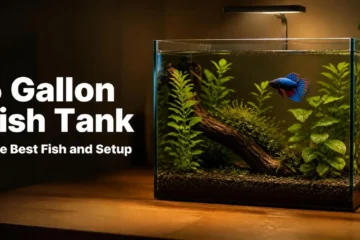
| Betta centerpiece | 1 male betta, 8 pygmy corydoras, 8 ember tetras, nerite snails | 77 to 80°F | Calm tankmates, no fin nippers, keep flow gentle |
| Colorful barb tank | 8 cherry barbs, 6 corydoras, 1 bristlenose pleco, Amano shrimp | 74 to 78°F | Active but peaceful, males show bright red |
| Tiger barb tank | 8 to 10 tiger barbs, 1 bristlenose pleco | 74 to 78°F | Keep barbs in a big group, no slow or long-finned tankmates |
Each fish links to a full care guide on the site: neon tetras, panda corydoras, honey gourami, bristlenose pleco, galaxy rasboras, pygmy corydoras, cherry barbs, tiger barbs, cherry shrimp, Amano shrimp and nerite snails. For more options, see our best aquarium fish for beginners list.
Fish to avoid in a 29 gallon tank
These fish are often sold small and cheap, and they all outgrow a 29.
| Fish | Adult size | Why not |
|---|---|---|
| Goldfish (fancy or common) | 6 to 12 in | Very messy, need cool water and much bigger tanks or ponds |
| Common pleco | 12 to 18 in | Outgrows the tank within a year or two |
| Silver dollars | 6 to 8 in | Fast schooling fish that need 75 gallons or more |
| Oscars and large cichlids like the green terror | 8 to 12 in | Too big and too territorial |
| Kissing gourami | 8 to 12 in | Grows far larger than people expect |
| Rope fish | 12 to 20 in | Long, escape-prone, needs a large tank |
| Angelfish | 6 in long, 8 in tall | Possible for one young fish, but a pair is cramped; a 40 breeder or taller tank is better |
Not sure whether your fish need more room? Our 55 gallon fish tank guide covers the next step up and the fish that suit it.
Setting up a planted 29 gallon
The 29 is one of the easiest tank sizes to plant well, because 18 inches of depth gives you a clear foreground, midground and background.
Background. Fast stem plants, vallisneria or tall swords fill the back and soak up nutrients that would otherwise feed algae. Hornwort works as a floating or anchored background plant with almost no care.
Midground. Crypts and anubias on rocks or wood. Anubias and java fern are tied or glued to hardscape, never buried.
Foreground. Dwarf sagittaria spreads into a low carpet without CO2, and java moss or flame moss softens the base of driftwood.
Light and fertilizer. Run the light 6 to 8 hours a day at first and add a little liquid fertilizer once plants start growing. Too much light too soon is the fastest way to an algae outbreak in a new tank.
Common 29 gallon tank problems
The tank is bowing or the stand is sagging. Drain it right away. Furniture and cheap stands flex under 300 pounds. Move the tank to a proper aquarium stand.
Algae on the glass and plants. Usually too many hours of light or too much food. Cut the light to 6 hours, feed less and add fast-growing plants. A cleanup crew helps too, and our algae eater fish guide shows which ones eat which algae.
The bottom looks dirty even after water changes. At 18 inches deep, waste settles where the filter flow is weakest. Point the filter outflow so water moves across the whole tank, and siphon the substrate during every water change.
Fish dying in the first month. Almost always an uncycled tank or too many fish added at once. Test for ammonia and nitrite, do partial water changes if either is above zero, and stop adding fish until both read zero.
The kit filter cannot keep up. Kit filters are often undersized. If the water stays hazy in a fully stocked tank, add a second filter or upgrade to one rated for 120 to 200 GPH.
Not enough light at the bottom. Plants at the front stretch or fade because 18 inches is deeper than many basic lights reach. Choose shade-tolerant plants for the foreground or upgrade to a brighter planted-tank light.
FAQ
What are the dimensions of a 29 gallon fish tank?
A standard 29 gallon tank measures 30 inches long, 12 inches wide and 18 inches tall (76 x 30 x 46 cm). Rimmed and rimless models can vary by a fraction of an inch, so check the brand’s outside measurements before buying a stand.
How much does a 29 gallon fish tank weigh?
About 40 to 45 pounds empty. Filled with water, substrate and decor, it weighs roughly 300 to 330 pounds, so it needs a dedicated aquarium stand.
How many fish can I put in a 29 gallon tank?
Plan by groups, not inches. A typical 29 gallon holds one school of 10 to 15 small fish, 6 to 8 small corydoras and one centerpiece fish, plus snails or shrimp. Use a stocking calculator and add fish slowly to a cycled tank.
Can a 20 gallon stand hold a 29 gallon tank?
A 20 gallon long stand has the same 30 x 12 inch footprint, and many are rated for both sizes. Only use it if the manufacturer rates it for a 29 gallon, because a 29 weighs about 100 pounds more than a 20 long. A 20 high stand is too short to support a 29.
Is a 29 gallon tank good for beginners?
Yes. It is big enough to keep water stable, which makes mistakes less dangerous, and small enough to be affordable and fit most homes. It is one of the most recommended first tanks for a community setup.
Can goldfish live in a 29 gallon tank?
Not long term. Goldfish produce a lot of waste and most grow 6 to 12 inches. A single fancy goldfish needs at least 30 to 40 gallons, and common goldfish do best in ponds.
What size filter do I need for a 29 gallon tank?
Choose a filter rated for 120 to 200 gallons per hour, which turns the water over about 4 to 7 times an hour. Hang-on-back filters sized for 30 to 40 gallon tanks are the easiest choice for beginners.
What size heater do I need for a 29 gallon tank?
A 100 watt heater works in a warm room, and a 150 watt heater is safer if your room gets cold. Set it to 74 to 78°F for most tropical community fish.
Final word
The 29 gallon is one of the best all-round tanks you can buy: the footprint of a 20 long, more water for stability, and enough height for a properly planted scape. Put it on a real aquarium stand, cycle it before adding fish, and stock it by groups and adult size, not inches. Do that and it will hold a lively, healthy community for years. If you are still choosing a size, compare it with our 10 gallon, 20 gallon and 55 gallon guides.